EDITORIAL: Will Tinubu Pick a Christian Running Mate in the 2027 Presidential Election?
EDITORIAL: Will Tinubu Pick a Christian Running Mate in the 2027 Presidential Election?
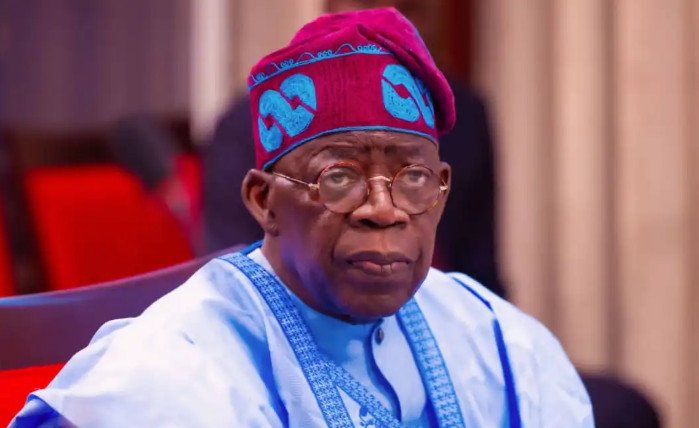
As Nigeria prepares for the 2027 presidential election, one of the major political questions that continues to dominate public discourse is whether President Bola Ahmed Tinubu will retain the Muslim-Muslim ticket that won the 2023 election or opt for a Christian running mate in the pursuit of broader national balance.
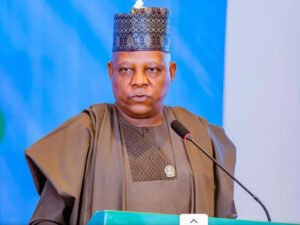
Newera News observed that for months, political analysts, religious leaders, and party stakeholders speculated that the President might replace Vice President Kashim Shettima with a Northern Christian to address concerns raised over the religious composition of the 2023 APC ticket. However, those speculations have now been overtaken by events. The All Progressives Congress (APC) has officially retained Vice President Kashim Shettima as President Tinubu’s running mate for the 2027 presidential election, ending months of uncertainty.
The decision signals the President’s preference for continuity, party stability, and confidence in his deputy’s performance rather than reopening a politically sensitive debate over religious balancing. Supporters argue that governance, competence, loyalty, and electoral strategy should take precedence over religious identity.
Nevertheless, the controversy surrounding the Muslim-Muslim ticket has not completely disappeared. Nigeria remains a deeply diverse nation where religious and ethnic inclusion continues to influence political perceptions. Many citizens believe that national leadership should visibly reflect the country’s diversity; others maintain that voters should prioritise character, competence, integrity, and the ability to solve Nigeria’s pressing economic and security challenges.
As the 2027 election approaches, Nigerians should resist reducing the presidential contest to religion alone. The nation’s future depends more on visionary leadership, economic reforms, security, infrastructure development, quality education, and institutional accountability than on the faith of the candidates.
Political parties must therefore present candidates with credible records, while citizens should carefully evaluate manifestos, leadership capacity, and commitment to national unity. Democracy flourishes when elections are driven by ideas and performance rather than identity alone.
Ultimately, the real question before Nigerians is not whether the President’s running mate is a Christian or a Muslim, but whether the next administration—whoever emerges victorious—can unite the nation, restore confidence in public institutions, create jobs, improve security, and deliver inclusive prosperity.
Nigeria deserves leaders who inspire trust across religious, ethnic, and regional lines.
The 2027 election should be an opportunity to strengthen national cohesion and democratic maturity, ensuring that competence, justice, fairness, and service to the people remain the defining qualities of those entrusted with leadership.