OSUN 2026: The Coming Storm Between Gov. Adeleke, Apc and the Battle for Osun
OSUN 2026: The Coming Storm Between Gov. Adeleke, Apc and the Battle for Osun
OSOGBO — The political atmosphere in Osun State is heating up as the state prepares for what promises to be one of Nigeria’s most closely watched governorship elections.
With the governorship election scheduled for Saturday, August 15, 2026, political parties are making their final moves in a contest that could have consequences far beyond Osun State. INEC says the election will take place across the state, while recent reports indicate that the number of parties on the ballot has risen to 15 following the addition of the Social Democratic Party candidate, Francis Olugbenga Ajala, by court order.
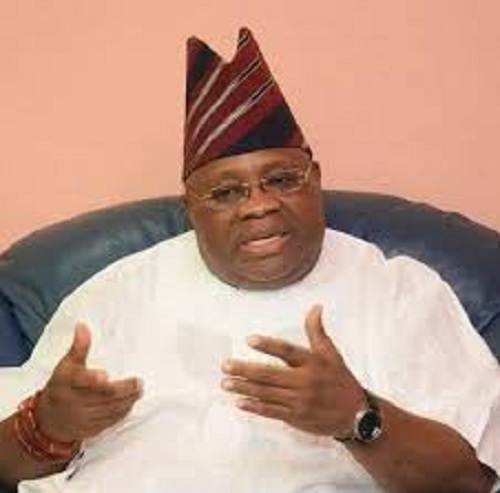
At the centre of the storm is incumbent Governor Ademola Adeleke, who is seeking another term. His major challenger from the All Progressives Congress is Bola Oyebamiji, while other political forces are also seeking to upset the established two-party contest.
A STATE ON THE EDGE OF A POLITICAL SHOWDOWN
The 2026 contest is more than a routine governorship election. It is increasingly being viewed as a major test of political strength, organisation, voter loyalty and the ability of political parties to translate campaign structures into actual votes.
For the incumbent, the election is an opportunity to secure another mandate and consolidate his political influence in Osun.
For the APC, however, Osun represents unfinished business.
The party lost the state in 2022 after Adeleke defeated then-governor Gboyega Oyetola. The 2022 result was close, with Adeleke winning about 50.14 per cent against Oyetola’s 46.62 per cent.
That history makes Saturday’s election particularly significant.
ADELEKE’S INCUMBENCY UNDER THE MICROSCOPE
Governor Adeleke enters the election with the advantage of incumbency and an established political base.
But incumbency alone does not guarantee victory.
The real question is whether the governor can convert his administration’s record, political popularity and campaign machinery into enough votes across the state’s 30 local government areas.
His supporters will argue that continuity is necessary.
His opponents will ask whether Osun needs a change of direction.
That debate will ultimately be settled not in campaign rallies or social media arguments, but at the polling units.
APC’S BIG TEST
For the APC, the election is an opportunity to reclaim Osun and demonstrate that the party remains a formidable political force in the South-West.
The emergence of Bola Oyebamiji as the party’s candidate has placed enormous responsibility on the APC machinery.
The party must not only mobilise its traditional supporters; it must persuade undecided voters and voters who may be dissatisfied with the incumbent administration.
The APC’s challenge is therefore straightforward but difficult: turn political strength into votes.
THE REAL POWER MAY BELONG TO THE VOTER
With more than two million registered voters expected to participate, the electorate remains the most important political force in Osun.
The coming storm will not ultimately be decided by the loudest politician, the biggest rally or the most expensive campaign.
Ordinary Osun voters will decide it.
Teachers.
Traders.
Farmers.
Civil servants.
Students.
Artisans.
Business owners.
Young voters.
Women.
Pensioners.
Every vote has the potential to determine who occupies the Government House in Osogbo.
INEC AND THE SECURITY AGENCIES MUST RAISE THE BAR
As the election approaches, the responsibility of the Independent National Electoral Commission and security agencies is enormous.
INEC has promised a credible and hitch-free election.
That promise must translate into reality.
The electoral commission must ensure that electoral materials arrive on time, accreditation proceeds smoothly, results are transparently transmitted and every legitimate vote counts.
Security agencies must also resist every attempt by political actors to intimidate voters, manipulate the process or turn polling centres into battlegrounds.
Osun does not need political violence.
Osun needs democracy.
THE COMING STORM
The real storm may not be the campaign rhetoric. It may be the battle for turnout, local-government dominance, youth votes, women voters and the undecided electorate.
And there is another important development: INEC’s last-minute addition of the SDP candidate after a court order has demonstrated that even in the final days, the electoral landscape can change.
That means no serious political observer should declare the election decided before voters actually vote.
The lesson from Osun’s political history is clear: never underestimate the Osun voter. The 2018 election, for example, went to a rerun after the initial contest was declared inconclusive, demonstrating just how dramatically the state’s elections can unfold.
MY VERDICT
The August 15 Osun governorship election is shaping up as a political storm—a battle between incumbency, opposition resurgence, voter expectations and the enormous machinery of Nigeria’s two major political blocs.
But beyond Adeleke, Oyebamiji and the other candidates, there is a bigger question:
Will Osun voters choose continuity or change?
The answer belongs to the people.
What Nigeria needs from Osun is not violence, vote-buying, intimidation or electoral manipulation. It needs a transparent contest in which the people freely choose the governor they believe can provide competent leadership, economic opportunity, security and a better future.
On Saturday, the political drums will stop. The voters will speak.
And Osun will decide.