Nigeria’s Prosperity in the Military Era Vs The Civilian Era
Nigeria’s Prosperity in the Military Era Vs The Civilian Era
Between Military Discipline and Democratic Governance: Why Has Nigeria Struggled to Turn Its Abundant Wealth into National Prosperity?
One question on Nigerians’ lips is: Was Nigeria economically better off under military or Civilian Government?
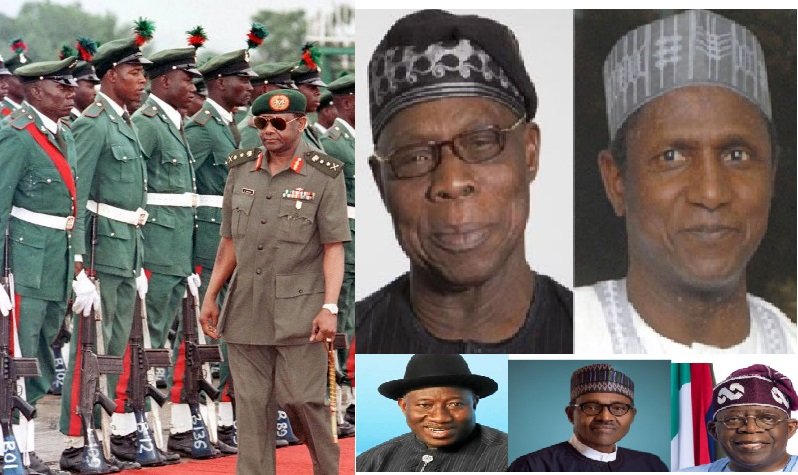
Military rule in Nigeria spanned nearly 29 years between 1966 and 1999, punctuated by two brief intervals of civilian governance.
Nigeria’s political history raises a question that refuses to leave national conversations: Were Nigerians more prosperous under military rule, or has civilian democracy delivered greater economic benefits?
For many Nigerians, the question is more than an academic debate. It reflects their daily experiences with food prices, electricity supply, employment opportunities, transportation, education, healthcare, security and the rising cost of living.
Some Nigerians remember the military era with nostalgia, when certain essential goods were more affordable, and most government policies were implemented with greater speed, and public infrastructure seemed to receive considerable attention.
Others remember the same period as an era of military dictatorship, political repression, human rights abuses, economic instability and the denial of citizens’ democratic freedoms.
Since the return to civilian democratic rule in May 1999, Nigeria has experienced several changes in economic policy, infrastructure development, telecommunications, banking, public administration and political participation. Yet persistent poverty, unemployment, insecurity, unreliable electricity and the high cost of living continue to raise questions about the quality of governance.
The fundamental question, therefore, is not simply whether military or civilian governments performed better.
It is this: Why has Nigeria, despite its enormous natural and human resources, struggled to build an economy that consistently delivers prosperity to the majority of its citizens?
Nigeria Under Military Rule: Achievements, Opportunities and Failures
Nigeria experienced military governments during several periods between 1966 and 1999, interrupted by civilian administrations from 1979 to 1983 and a brief interim national government in 1993.
During these decades, the country experienced significant political, economic and social changes.
The discovery and expansion of petroleum production transformed government revenue and Nigeria’s international economic position. Oil income supported major public expenditure, including infrastructure, education, industrial development and other government programmes.
However, the benefits were uneven, and economic outcomes varied significantly from one administration to another.
Infrastructure and National Development
Military governments pursued several major infrastructure and development projects.
These included road construction, bridges, public buildings, industrial facilities and the expansion of federal institutions. Some military administrations also invested in education, agriculture and public utilities.
The oil boom of the 1970s provided substantial revenue for national development. Yet the dependence on oil also exposed Nigeria to the consequences of falling international petroleum prices, declining revenue and poor economic planning.
The existence of impressive infrastructure projects did not necessarily mean that the economy was sustainable or that ordinary Nigerians enjoyed widespread prosperity.
Infrastructure must be assessed not only by the number of projects constructed but also by their quality, maintenance, economic usefulness and contribution to productive activity.
- The Appeal of Decisive Government
One argument frequently advanced by supporters of military-era administration is that military governments could make decisions quickly because they were not subject to the same electoral competition, legislative bargaining and party negotiations associated with democratic government.
This perception of administrative speed remains attractive to citizens frustrated by delays in government projects and the implementation of public policies.
However, speed is not automatically evidence of good governance.
A government can make decisions quickly and still make serious mistakes. Without effective public scrutiny, independent institutions and accountability, poor decisions can continue for years without meaningful correction.
The lesson for Nigeria’s democracy is to improve the speed and efficiency of public administration without sacrificing constitutional government, transparency and citizens’ rights.
The Economic Failures of the Military Era
Military rule did not guarantee economic prosperity.
Research examining Nigeria’s economic development between 1966 and 1999 concluded that the country remained substantially underdeveloped despite the military’s various development initiatives.
The country experienced economic difficulties associated with oil-price fluctuations, rising external debt, inflation, policy instability and weak productive capacity.
The Structural Adjustment Programme introduced in 1986 under General Ibrahim Babangida sought to address serious economic imbalances and restructure the economy.
However, its effects remain controversial. Although some reforms sought to improve competitiveness and reduce economic distortions, many households and businesses faced considerable hardship during the adjustment period.
The military era also witnessed political repression and restrictions on democratic participation. Nigeria’s economic development cannot be separated entirely from the institutional consequences of prolonged military intervention in civilian government.
Military rule was therefore neither an uninterrupted period of prosperity nor an era without meaningful development projects. Its record was mixed, and its economic achievements must be weighed against its failures and the absence of democratic accountability.
Nigeria Under Civilian Rule: Democratic Progress and Economic Disappointment
Nigeria returned to democratic government on May 29, 1999. Since then, civilian administrations have governed the country under the Fourth Republic.
Democracy restored regular elections, expanded political participation and provided greater constitutional space for public debate, civil society activity and independent journalism.
It also created opportunities for citizens to challenge government decisions through democratic institutions.
Nevertheless, the restoration of democracy did not automatically produce economic prosperity.
Telecommunications and Private-Sector Expansion
One of the most visible changes during the democratic era has been the expansion of telecommunications.
The growth of mobile telephone services, internet access, digital payments and technology-enabled businesses has transformed communication and created opportunities for entrepreneurs, workers and consumers.
The banking and financial services sectors have also undergone substantial changes.
These developments have helped connect Nigerians to wider markets, expanded access to financial services and created new opportunities for economic participation.
However, access remains uneven, and the cost of internet services, electricity and other essential inputs continues to constrain many businesses.
Banking, Trade and Private Investment
Civilian governments have pursued different policies aimed at improving the business environment, strengthening financial institutions and attracting domestic and foreign investment.
Banking consolidation, pension reforms, telecommunications expansion and changes in the management of public finances have shaped the economy in different ways.
The results have not always met public expectations.
Businesses continue to face high operating costs, infrastructure shortages, foreign-exchange uncertainty and difficulties obtaining affordable credit.
The central challenge is to ensure that financial-sector growth translates into productive investment, industrial expansion, job creation and rising household incomes.
A growing financial sector cannot, by itself, guarantee prosperity when manufacturers struggle to obtain electricity, farmers lack adequate storage facilities and young people cannot find productive employment.
- Democracy and the Cost of Governance
A persistent criticism of Nigeria’s civilian administrations concerns the cost of governance.
Citizens frequently question the expenditure associated with political offices, official travel, government vehicles, large entourages and overlapping public institutions.
These concerns deserve transparent investigation and evidence-based public debate.
However, responsible analysis must distinguish between legitimate public expenditure and wasteful or poorly justified spending.
The real test is whether public expenditure produces measurable benefits.
Every naira spent by government should be assessed against the national priorities of education, healthcare, security, infrastructure, industrial development and poverty reduction.
Democracy becomes difficult to defend in the eyes of citizens when elected officials enjoy privileges while ordinary people struggle to afford basic necessities.
Persistent Poverty and Unemployment
The World Bank’s Nigeria country overview identifies widespread poverty, weak job creation, insecurity and infrastructure gaps as continuing development challenges. Its estimates show that economic growth has not been sufficient to generate enough productive jobs and materially reduce poverty.
This is one of the most important tests of civilian governance.
Elections, political appointments and changes in government are not sufficient measures of national progress.
The ultimate test is whether the economy enables citizens to earn decent incomes, establish sustainable businesses, educate their children, obtain healthcare and live securely.
Nigeria must therefore move beyond celebrating economic growth rates and focus more directly on the quality and distribution of that growth.
Comparing the Military and Civilian Eras: What Does the Evidence Say?
A serious comparison requires more than memories, political arguments or isolated examples.
Different research studies have reached different conclusions because they use different periods, indicators, data and methods.
One study covering 1966–2015 reported average economic growth of approximately 4.4% during military rule and 5.0% during democratic rule. It also reported differences in inflation, unemployment, exchange rates and life expectancy. These figures are historical averages from that study, not a definitive measure of which system delivered greater prosperity.
Another study comparing 1989–1998 with 1999–2008 reported stronger average GDP growth during the first decade of the Fourth Republic, while also finding that poverty incidence remained high.
These differences demonstrate why historical comparisons must be handled carefully.
The periods being compared experienced different international oil prices, population growth, exchange-rate regimes, global economic conditions and technological developments.
A fair assessment should consider the following areas:
Indicator
Military Era
Civilian Era
Economic growth
Growth varied considerably across administrations and oil-price cycles.
Growth has also varied, with periods of expansion and serious economic difficulty.
Infrastructure
Major roads, bridges, public institutions and other projects were undertaken.
Infrastructure investment has continued, but substantial gaps remain.
Telecommunications
Access was limited compared with the modern era.
Mobile communications, internet services and digital business expanded substantially.
Inflation and purchasing power
Inflation and economic instability affected different periods, particularly during periods of adjustment.
Inflation, currency pressures and the rising cost of living have weakened household purchasing power in recent years.
Employment
Formal employment opportunities existed, but economic restructuring and weak industrial performance created difficulties.
A larger population and inadequate job creation have intensified employment pressures.
Accountability
Military governments generally operated without competitive national elections and ordinary democratic checks.
Elections and constitutional institutions provide mechanisms for accountability, although their effectiveness remains contested.
Civil liberties
Several military administrations restricted political activity, public protest and press freedom.
Citizens have greater constitutional freedoms, although challenges to their protection remain.
National prosperity
Development projects did not eliminate structural economic weaknesses.
Economic expansion and technological advances have not eliminated widespread poverty.
The comparison suggests that neither system should be judged by one economic indicator alone.
A country can record economic growth while its citizens become poorer in real terms. It can build roads while neglecting their maintenance. It can earn substantial oil revenue while failing to develop competitive industries.
Likewise, the presence of elections does not guarantee good economic management, just as the ability to issue commands does not guarantee successful development.
Why Did Some Nigerians Experience Greater Affordability in Earlier Decades?
Nostalgia for earlier periods is understandable, particularly among Nigerians who remember different prices for food, transportation, housing and other necessities.
However, comparing the prices of goods across decades without considering income, purchasing power and the wider economy can produce misleading conclusions.
The naira has undergone substantial changes in value over time. A product that cost relatively little decades ago cannot be compared fairly with its present price without examining wages, inflation, exchange rates and household purchasing power.
Similarly, the cost of living under a military administration cannot be attributed entirely to military rule. International oil prices, domestic production, agricultural output, monetary policy and other economic conditions also influence prices.
The appropriate question is not simply whether goods were cheaper in a particular year.
It is whether the average Nigerian household could afford food, housing, education, healthcare, transportation and other necessities from its income.
Government should publish accessible historical data that enable citizens to compare real wages, food affordability, employment, electricity access, poverty and other indicators across administrations.
Such evidence would help replace political nostalgia and partisan arguments with informed national debate.
The Real Problem: Nigeria’s Failure to Build a Productive Economy
Nigeria’s economic difficulties cannot be explained by the type of government alone.
They are connected to the structural weaknesses that have persisted across administrations.
Excessive Dependence on Crude Oil
Nigeria’s reliance on petroleum revenue has exposed public finances to direct international market fluctuations.
When oil prices or production fall, government revenue comes under pressure, affecting budgets and public investment.
The country must expand agriculture, manufacturing, solid minerals processing, tourism, technology and other productive sectors.
Natural resources should support development of a diversified economy rather than encourage permanent dependence on a single source of revenue.
- Unreliable Electricity
Electricity shortages increase production costs, discourage investment and reduce the competitiveness of Nigerian businesses.
Manufacturers, small businesses, schools, hospitals and households all require reliable power.
Nigeria needs sustained investment in electricity generation, transmission and distribution, alongside credible regulation, cost-reflective arrangements where appropriate, protection for vulnerable consumers and transparent accountability for service delivery.
Without dependable and affordable electricity, the ambition to industrialise the country will remain unnecessarily difficult to achieve.
- Weak Industrial Development
A prosperous country cannot depend indefinitely on exporting raw materials and importing a large share of its finished goods.
Nigeria should encourage local processing, manufacturing, agricultural value chains and the production of goods that can compete in domestic and international markets.
Government incentives should be tied to measurable results, including local employment, productivity, technology transfer, export growth and improved product quality.
- Corruption and Poor Public Expenditure
Corruption and wasteful expenditure undermine public confidence and reduce the resources available for development.
Public procurement should be transparent, contracts should be monitored, and public officials should be held accountable under the law.
Investigations into alleged wrongdoing must follow due process, while proven offences should attract appropriate legal consequences.
The objective should be to build institutions in which public resources are protected regardless of whether the country is governed by a military administration or an elected government.
- Education and Human Capital
Nigeria’s greatest long-term asset is its people.
A productive economy requires quality education, technical training, healthcare, research, innovation and opportunities for young people to develop their talents.
Government must ensure that public spending on education produces measurable improvements in literacy, numeracy, technical competence and employability.
The country should equip young Nigerians to compete globally while creating local opportunities that encourage skilled workers and entrepreneurs to build their futures at home.
- What Nigeria Can Learn from Both Eras
Nigeria should not attempt to recreate military rule merely because some citizens remember aspects of the past favourably.
Instead, the country should identify effective administrative practices and incorporate them into a constitutional democratic system.
From the military era, the country can examine the importance of clear national priorities, disciplined implementation, continuity of major projects and the capacity to make timely decisions.
From the democratic era, Nigeria must preserve competitive elections, constitutional government, civil liberties, legislative oversight, judicial independence and the right of citizens to hold their leaders accountable.
The goal should be to combine administrative efficiency with democratic accountability.
A government should be able to deliver a major road, hospital, railway, power project or industrial programme without allowing it to become an excuse for waste, political repression or the denial of citizens’ rights.
Nigeria needs a professional civil service, independent oversight institutions, predictable economic policies and transparent performance standards.
Government officials should be evaluated on what they deliver, not merely on the speeches they make or the political alliances they maintain.
- A Newera News Agenda for National Prosperity
For Nigeria to move beyond the military-versus-civilian argument, the country needs a practical national development agenda that successive administrations can implement.
First, establish measurable national economic targets.
Government should set clear objectives for reducing poverty, increasing real household incomes, expanding productive employment, improving electricity access and raising manufacturing output.
These targets should be published annually, with independent assessments of progress.
Second, strengthen agricultural productivity.
Farmers need improved access to quality seeds, irrigation, mechanisation, storage, processing facilities, affordable financing and reliable markets.
Greater domestic food production can help improve food security, create employment and reduce exposure to international supply shocks.
Third, make electricity a national industrial priority.
Federal and state governments, regulators and electricity companies should work towards reliable power supplies, transparent service standards and investments that support productive activity.
Fourth, reduce the cost of doing business.
Businesses need predictable taxation, improved transport networks, access to credit, efficient ports, simpler regulatory procedures and stronger protection for legitimate investments.
Fifth, reform public expenditure.
Every major government project should have a published budget, implementation schedule, responsible authority and measurable outcome.
Independent audits and effective legislative oversight should help identify waste and ensure that public resources serve the public interest.
Sixth, invest in young Nigerians.
Technical education, apprenticeships, digital skills, entrepreneurship and access to finance should be linked to genuine economic opportunities.
Youth empowerment must go beyond distributing grants or announcing training programmes. It should produce sustainable employment, profitable businesses and measurable improvements in living standards.
Seventh, strengthen democratic institutions.
Independent courts, credible elections, responsible journalism and effective anti-corruption institutions are essential to ensuring that governments can be questioned and public resources protected.
Eighth, ensure continuity in national development.
A new administration should not abandon every worthwhile project started by its predecessor to create a political distinction.
Projects should be evaluated objectively. Successful programmes should continue, failed ones should be corrected, and wasteful ones should be discontinued with clear public explanations.
Nigeria’s development must be treated as a continuing national responsibility rather than the private project of any political party or administration.
- The Final Verdict: Leadership Quality Matters More Than the Uniform
Nigeria’s history demonstrates that military rule did not automatically produce prosperity, just as civilian rule has not automatically delivered economic security.
Military administrations undertook development projects, but the country also experienced economic setbacks and prolonged restrictions on democratic government.
Civilian administrations have expanded political freedoms, telecommunications and other areas of economic activity, yet many Nigerians continue to struggle with poverty, inadequate infrastructure and the high cost of living.
These realities make it necessary to distinguish the form of government from the quality of leadership and the effectiveness of public institutions.
The decisive questions are whether government policies are sound, whether public resources are managed transparently, whether institutions work, whether citizens are protected and whether economic opportunities reach the wider population.
A country cannot achieve sustainable prosperity through political slogans alone.
Neither military commands nor democratic campaign promises can replace reliable electricity, productive industries, quality education, efficient transportation, secure communities and a justice system that treats citizens fairly.
Nigeria needs leaders who understand that public office is a responsibility, not a personal entitlement.
It needs institutions capable of enforcing the law, protecting public funds and delivering essential services.
Most importantly, it needs a productive economy that creates opportunities for millions of Nigerians to work, innovate, invest and prosper.
CONCLUSION: THE NIGERIA WE DESERVE
The debate over military and civilian prosperity should lead to a more important national conversation: how can Nigeria guarantee prosperity under a constitutional democratic system?
The answer lies in responsible leadership, economic diversification, industrialisation, disciplined public expenditure, national security, quality education and respect for the rule of law.
Nigerians should demand evidence of progress from every administration, regardless of its political party, regional origin or ideology.
Nigeria’s prosperity must be measured by the living conditions of its people, not merely by government revenue, impressive infrastructure projects or the growth of national economic statistics.
Nigeria does not need to choose between administrative efficiency and democratic freedom. It needs both.
It needs a democracy that delivers, institutions that work, leaders who serve and an economy that rewards productive effort.
That is the foundation upon which a truly prosperous New Nigeria can be built.
Editorial note
The historical comparison is necessarily complex: economic performance varied across individual administrations, and studies comparing military and civilian rule have produced differing results. The article therefore avoids treating either era as uniformly prosperous or uniformly unsuccessful. Its central argument is that effective leadership, sound economic policies, accountability and productive investment are essential to sustainable national prosperity.