
Electric and CNG Vehicles and New Road Safety Frontier for Nigeria
Electric and CNG Vehicles and New Road Safety Frontier for Nigeria
The transformation of Nigeria’s transportation system is entering a new phase. As the country increasingly explores cleaner and alternative energy sources for mobility, electric vehicles (EVs) and compressed natural gas (CNG)-powered vehicles are gradually becoming part of the Nigerian motoring environment. For the Federal Road Safety Corps, the emergence of these vehicles is not merely an energy or environmental conversation. It is fundamentally a road-safety conversation. NigerianBusiness News
As Nigeria participates in international discussions on improving global road safety and accelerating progress towards reducing road traffic deaths and injuries, the question is increasingly clear: How prepared is the country to ensure that new vehicle technologies are introduced without creating new safety risks?
Interestingly, the FRSC Corps Marshal, Shehu Mohammed, was at the recent summit of the Nigerian Auto Journalists Association in Lagos. He also gave insight into the Corps’ preparedness towards upscaling its operational and policy alignment to be in sync with electric and CNG vehicles to ensure a safer motoring environment in Nigeria. Without much emphasis, it is obvious that CNG and EVs offer important opportunities for Nigeria. EVs eliminate tailpipe emissions, while CNG vehicles can provide an alternative to conventional petrol and diesel propulsion.
However, a change in propulsion technology does not automatically eliminate road crashes. A vehicle may be electric, gas-powered or petrol-driven, but it still operates within the same road environment. It interacts with pedestrians, motorcycles, heavy trucks, cyclists and other vehicles. It is still affected by speeding, poor road design, mechanical failure, driver distraction, fatigue, reckless overtaking and inadequate maintenance.
The implication is significant: Nigeria’s transition to cleaner mobility must be accompanied by an equally deliberate transition to stronger safety standards.
The central message from the road-safety perspective is therefore simple: innovation must never outrun regulation, training and emergency preparedness.
Electric vehicles: New technology, new safety considerations
Electric vehicles introduce a different technological architecture from conventional vehicles. Their safety profile is influenced by high-voltage battery systems, electronic control systems, sophisticated software and charging infrastructure. For road users, several issues require particular attention.
Battery-related incidents: Lithium-ion battery systems can present specific challenges when severely damaged, overheated or involved in a crash. In such situations, emergency responders must understand the vehicle’s high-voltage system and know how to isolate the power source safely. This has implications for Nigeria’s emergency response architecture. Road safety is not only about preventing crashes; it is also about ensuring that rescuers can safely respond when crashes occur.
Many electric vehicles produce significantly less engine noise at low speeds than conventional vehicles. This can create additional risks for pedestrians, particularly in busy urban environments, markets, residential areas and locations with vulnerable road users. The development of a safer motoring environment will therefore require greater public awareness and, where necessary, technological and regulatory responses.
The arrival of EVs also requires a new generation of technicians trained in high-voltage systems, battery diagnostics and electronic vehicle safety. Unqualified repairs, unauthorized modifications and the use of incompatible components could create safety risks.
This reinforces a longstanding FRSC principle: a mechanically deficient vehicle has no place on the road, regardless of the type of energy it uses. The Corps Marshal has repeatedly stressed the importance of vehicle roadworthiness and maintenance in preventing avoidable crashes.
CNG vehicles: Standards and proper conversion
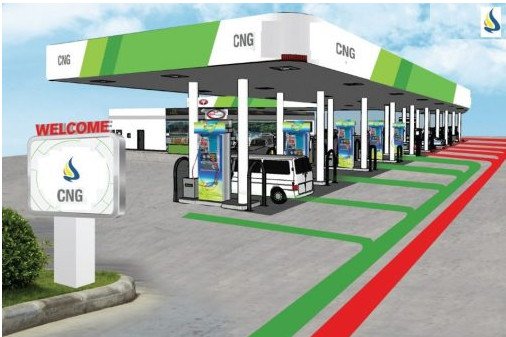
CNG vehicles also offer opportunities for Nigeria, particularly in a country with significant natural-gas resources. But their safety depends heavily on the quality of the vehicle, the integrity of the gas storage system and the competence of the conversion process. NigerianBusiness News
The most important safety principle is that CNG conversion must not be carried out by unqualified persons or in unauthorized facilities.
A poorly installed system can create serious risks, including –improperly fitted gas cylinders; damaged or poorly maintained fuel lines; inadequate ventilation; unsafe modifications to vehicle structures; poor-quality components; and failure to inspect and maintain the system properly.
For this reason, the expansion of CNG mobility must go hand in hand with effective standards for conversion centres, technicians, inspection, certification and periodic maintenance.
The public must also understand that CNG vehicles require specific safety knowledge. Drivers and fleet operators need to know how to respond to suspected gas leaks, vehicle damage and other emergencies.
The role of the FRSC in the era of EVs and CNG vehicles will extend beyond traditional traffic enforcement. As the composition of Nigeria’s vehicle fleet changes, inspection systems must evolve to recognise the specific safety requirements of new propulsion technologies. FRSC personnel, rescue officers and emergency responders require continuous training to understand the characteristics of electric and CNG vehicles, particularly during crash response and vehicle recovery. NigerianBusiness News
The safety of alternative-fuel vehicles requires cooperation among regulators, manufacturers, vehicle importers, conversion centres, emergency services, fire authorities, transport operators and road users.
A call for regulation before rapid expansion
As Nigeria increases the adoption of EVs and CNG vehicles, one of the most important policy lessons is the need to ensure that growth is matched by regulation. The country must continuously review vehicle safety standards; importation requirements; CNG conversion standards; EV battery and charging safety; vehicle inspection procedures; emergency response protocols; technician certification; fire and rescue preparedness; and public education requirements. The objective should not be to discourage innovation. Rather, it should be to ensure that innovation is introduced responsibly. NigerianBusiness News
As the Corps Marshal’s global road safety engagement underscores, the future of road safety will increasingly be inseparable from technology, but technology must be integrated into a broader system of regulation, enforcement, education, infrastructure and emergency response.
Nigeria is moving towards a more diversified transportation energy system. Electric and CNG vehicles will increasingly become part of the nation’s mobility landscape. The question is no longer simply whether these vehicles are the future. The more important question is whether Nigeria is prepared to make that future safe. The message from the FRSC road-safety perspective is clear: cleaner mobility must also be safer mobility.
As the country embraces new vehicle technologies, safety standards must be built into every stage from manufacturing and importation to conversion, registration, maintenance, driving, crash response and rescue. The Corps’ responsibility is not merely to respond to the vehicles of today, but to help prepare Nigeria for the mobility systems of tomorrow. NigerianBusiness News
The future of transportation may be electric. It may be compressed natural gas, but whatever powers the vehicle, safety must remain the power that drives the journey.
•Ohaeri, FNIPR, is deputy corps commander and corps public education officer at the FRSC national headquarters, Abuja.