Post-Reforms: FG Passes Burden of Economic Growth and Stability to State Governors
Post-Reforms: FG Passes Burden of Economic Growth and Stability to State Governors
The Nigeria Vice President Kashim Shettima, and World Trade Organisation (WTO) Director-General Ngozi Okonjo-Iweala, leading business figures, economists and state governors yesterday urged Nigeria’s sub-national governments to seize opportunities created by recent economic reforms by aggressively attracting investment, diversifying their economies and creating jobs, arguing that the country’s next phase of growth will depend largely on the ability of states to convert macroeconomic stability into broad-based prosperity.
Newera News learnt that the Coordinating Minister of Economy while Speaking at the Delta State Economic and Investment Summit 2026, themed ‘Harnessing Our Strengths, Unlocking Our Potentials,’ held at the Dome Event Centre in Asaba, Minister of Finance and Coordinating Minister of the Economy, Taiwo Oyedele, said that while the Federal Government can deliver macroeconomic stability, the responsibility for translating that stability into economic prosperity rests largely with state and local governments.
Oyedele said macroeconomic stability alone cannot guarantee genuine economic transformation, stressing that decisions capable of creating jobs, attracting industries and stimulating local production must be taken by state governments that understand their comparative advantages.
According to him, “The centre secures economic stability, the state converts stability into shared prosperity, and local governments deliver it as the tangible highest standard of living for every family. That division of labour is where true fiscal restructuring takes place.”
He linked Delta State’s investment opportunities to the Federal Government’s recent economic reforms, noting that the administration had unified the foreign exchange market, removed fuel subsidies that had drained public finances, ended excessive money creation to finance government spending, and introduced comprehensive tax reforms that broadened the tax base while easing the burden on businesses, particularly small enterprises.
Oyedele said the reforms had significantly increased revenues accruing to states and local governments, enabling them to pay salaries, clear pension arrears and invest more in infrastructure and human development.
He added that Nigeria’s macroeconomic turnaround was already becoming evident and urged local and international investors to take advantage of the improving economic environment by investing in Delta State.
Dr Ngozi Okonjo-Iweala, who was the keynote speaker, urged Delta State and other African economies to position themselves to benefit from what she described as the emerging era of re-globalisation by attracting investment through diversified global supply chains, disciplined economic management and strategic industrial policies.
She said although the global economy is facing increasing uncertainty arising from geopolitical tensions, tariff disputes, climate shocks and rapid technological change, countries prepared to adapt still have significant opportunities to achieve sustained growth.
She observed that the global rules-based trading system has come under unprecedented pressure in recent years, with unilateral tariff measures and geopolitical conflicts disrupting international commerce.
Despite these challenges, she said global trade had demonstrated remarkable resilience, recording a value of $34.65 trillion last year, while world merchandise trade expanded by 4.6 per cent in 2025. African merchandise exports also grew by 10.3 per cent, driven by minerals, metals, fuels and agricultural products such as cocoa, while global services trade grew by 5.3 per cent and digitally delivered services trade by nearly 6 per cent.
According to her, these global disruptions have also created stable opportunities that did not exist for Africa a decade ago.
She identified one of the biggest changes shaping the global economy as growing concern over excessive dependence on a few countries for critical goods and services, citing reliance on the United States for digital services and final market demand, and on China for critical minerals.
These over-dependencies, she said, have prompted governments and businesses around the world to diversify their supply chains to reduce geopolitical and economic risks.
She described the process as re-globalisation, explaining that it seeks to make global value chains more resilient by spreading production and investment across more countries instead of concentrating them in only a few locations.
The WTO chief said the trend presents a major opportunity for Nigeria and Delta State, which have traditionally remained on the margins of the global distribution of labour.
She also highlighted the opportunities created by the African Continental Free Trade Area (AfCFTA), describing the 1.4 billion-person market as a powerful attraction for investors seeking access to both African and international export markets.
“Seizing these two sets of opportunities, the desire for this diversification and deconcentration of global supply chains and the desire to seize the opportunity of the African continental free trade area is what we are talking about. It’s at the heart of what I think Delta State should be thinking about in its growth and development strategy,” she said.
The WTO chief urged the state government to concentrate on a limited number of strategic sectors capable of driving industrialisation, employment and economic transformation, rather than spreading resources across numerous projects.
“Delta can become Nigeria’s blue economy hub. Build fisheries, cold chain facilities, port services and marine logistics,” she said.
Shettima defends Tinubu’s reforms, pitches Delta as investment destination
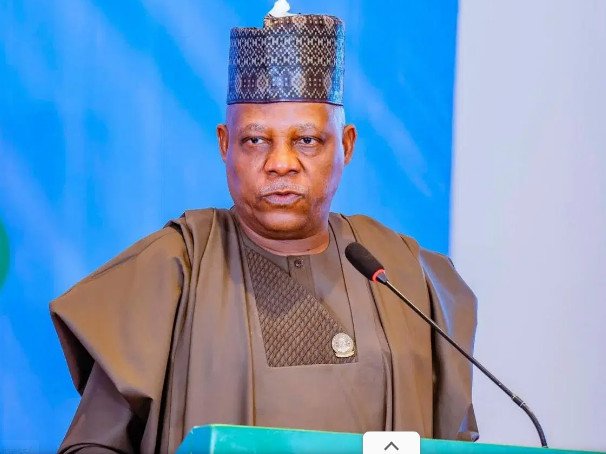
Vice President Kashim Shettima described Delta State as one of Nigeria’s most promising investment destinations, assuring that the Federal Government would continue to support states pursuing economic reforms and investment promotion in line with President Bola Tinubu’s Renewed Hope Agenda.
Shettima pitched the state as Nigeria’s investment destination of choice before more than 4,000 participants, including diplomats, captains of industry and delegates from countries such as Brazil and China, urging local and international investors to seize what he described as a defining moment for Nigeria’s economy.
He said the Federal Government was encouraged by Delta State’s commitment to economic recovery and diversification, assuring that the administration would continue to partner with states actively pursuing reforms that align with national economic priorities.
He commended Governor Sheriff Oborevwori for what he described as a bold and strategic investment agenda capable of transforming Delta into a major hub for local and international investors.
The Vice President stressed that the state’s future could not depend on crude oil alone, arguing that economic diversification remained essential for long-term prosperity.
According to him, “The future of a people cannot be deposited in a single commodity. Diversification is an instinct of economic self-preservation and a measure of the quality of leadership.”
He highlighted Delta’s extensive coastline, ports in Warri, Koko, Burutu and Sapele, abundant natural gas reserves, agricultural potential, mineral deposits and entrepreneurial population as key assets capable of attracting investment.
He urged the state government to sustain investments in agriculture, manufacturing, logistics, industrial development and the blue economy, describing them as critical sectors for creating jobs and strengthening Delta’s competitiveness.
According to him, the summit demonstrated Governor Oborevwori’s resolve to move beyond policy discussions by pursuing tangible investments that deliver measurable economic outcomes.
Defending the administration’s economic reforms, Shettima argued that they had strengthened Nigeria’s economic fundamentals despite global uncertainties.
He attributed the country’s rising foreign reserves to reforms undertaken by the Federal Government and praised Anambra State Governor Chukwuma Soludo for publicly supporting the policies.
“From reserves of $3 billion, when we were experiencing capital flight and capital scarcity, now we are experiencing capital inflows, so that our foreign reserves have gone up to about $52 billion and counting in a turbulent world,” Shettima said.
“I think the President deserves commendation and not condemnation.”
Oborevwori unveils $100m investment fund to attract private capital
Delta State Governor Sheriff Oborevwori yesterday unveiled a $100 million (about N133 billion) Investment Support Fund designed as a Viability Gap Fund to reduce investment risks, bridge financing gaps and attract domestic and foreign investors to the state.
The announcement, made at the Delta State Economic and Investment Summit 2026, drew a standing ovation from participants, who described the initiative as one of the boldest investment commitments by a sub-national government in recent years.
Oborevwori said the fund would ensure that investment agreements reached during the summit are translated into bankable projects capable of stimulating industrialisation, creating employment opportunities and expanding the state’s economy.
“This demonstrates our commitment to turning investment commitments into measurable economic impact,” the governor declared.
He also emphasised that the fund was not financed through borrowing.
“This one we are not borrowing. We are not going to borrow the money. The money is there,” the governor said, describing the initiative as evidence of his administration’s commitment to implementing agreements reached at the summit.
The governor said the intervention forms part of his administration’s broader strategy to strengthen the state’s investment climate, diversify the economy beyond oil and gas, and position Delta as a more competitive destination for domestic and foreign capital.
According to him, the initiative represents a major step towards building a modern, diversified economy capable of withstanding external shocks while accelerating private-sector investment.
Oborevwori explained that the summit was conceived following investment missions to China, Brazil and Germany in July 2025, during which his administration engaged prospective investors and explored economic opportunities for the state.
He said: “Today marks the crystallisation of a journey that began in July and August 2025 when I led a delegation of cabinet members to China and Brazil respectively to seek partnerships to explore and enhance the economic and investment opportunities in Delta State. This forum presents us with a golden opportunity to match words with actions, align our expectations with specific goals and seek those goals with measurable results.”
He added that the investment engagements undertaken during those visits were already yielding results, particularly at the Kwale-Koko Free Trade Zone, which has continued to attract investors from China and Brazil.
According to the governor, the summit was deliberately designed to move beyond speeches by producing concrete partnerships capable of delivering jobs, wealth creation and sustainable prosperity.
“This is not a mere talk shop. The money is there as practical evidence of our commitment. We are matching words with action. We are ready, we are stable, and the investment engagements we began in Brazil, China and Germany are already yielding results,” he stated.
Avuru, Elumelu, Soludo chart path to Delta’s economic transformation
Chairman of the Delta State Economic and Investment Summit, Austin Avuru, Chairman of Heirs Holdings, Tony Elumelu, and Anambra State Governor Chukwuma Soludo outlined measures they believe would accelerate Delta State’s economic transformation, calling for greater investment in maritime infrastructure, agriculture, industrialisation, power and regional collaboration.
Speaking from the private sector perspective, Avuru said Delta possesses the natural advantages to become one of Nigeria’s leading commercial and industrial centres but requires deliberate policies to unlock its competitive strengths.
According to him, the state’s four seaports — Warri, Sapele, Koko and Burutu — together with its two airports and strategic road infrastructure, position Delta to become a major logistics and commercial hub.
He urged the state government to dredge the waterways leading to Warri and Burutu ports to accommodate larger vessels and increase cargo traffic.
“Cargo traffic through our four ports would multiply several times over, creating jobs, stimulating commerce and expanding economic activity across the state,” he said.
Avuru noted that hydrocarbon-rich countries around the world had deliberately used oil revenues to build economies capable of thriving beyond petroleum, citing Norway, Kuwait, Saudi Arabia and the United Arab Emirates as examples.
“The lesson here is that even here in Nigeria, hydrocarbon-rich states must take lessons from what these countries have done. Sub-nationals going forward must now intentionally and consciously move beyond dependence on the centre. We have to consciously build a sub-national economy based on the niche areas of competitive advantage that we have,” he said.
He identified maritime commerce, agriculture and industrial development as the three sectors Delta must prioritise if it intends to diversify its economy and reduce dependence on oil and gas.
On agriculture, Avuru advocated the establishment of large state-owned land banks to support commercial cultivation of oil palm and cassava, alongside opportunities in aquaculture and ranching.
Also speaking at the summit, Chairman of Heirs Holdings, Tony Elumelu, endorsed Delta as one of Nigeria’s emerging investment destinations and pledged private-sector support to unlock the state’s power potential.
“I want to congratulate our Governor for his visionary leadership and for what he is doing for the people of Delta State,” he said.
The billionaire investor, an indigene of the state, said he had closely monitored developments in Delta and was encouraged by the pace of transformation.
“Through television, social media and other platforms, I have seen the remarkable progress being made. I see people investing and building estates in Delta State, and that is encouraging. Delta State is changing, and we are proud of what is happening,” he said.
Describing Delta as an attractive destination for local and foreign investors, Elumelu said: “Delta State is ready for investment. It is profitable, investor-friendly and very receptive to businesses.”
He stressed, however, that sustainable industrialisation would depend largely on reliable electricity supply.
“At Heirs Holdings and Transcorp Group, we are committed to supporting the economic transformation of our country. Everything we have discussed here ultimately comes down to one critical factor—electricity,” he stated.
“In Delta State, we have about 1,000 megawatts of installed electricity generation capacity, enough to make a significant difference in driving industrialisation and economic growth. Unfortunately, we are unable to fully utilise this capacity because of certain constraints, particularly gas supply challenges,” he said.
He called on Governor Sheriff Oborevwori to partner with the private sector to remove the bottlenecks.
Governor Soludo called for closer economic collaboration between Delta and Anambra, describing both as natural “twin growth hubs” capable of driving regional prosperity.
“With the completion of the Second Niger Bridge, Delta and Anambra have effectively become twin states, much like New York and New Jersey. We should institutionalise our relationship beyond personal friendships by creating working groups that will promote economic cooperation,” he said.
“There are many areas where Anambra can learn from Delta, and many areas where Delta can learn from Anambra. We are building a new commercial and industrial city powered by an aerotropolis, and I see several areas where our development strategies align. We should build synergies rather than compete unnecessarily.”
Soludo said recent macroeconomic reforms had created a more attractive environment for investment.
“From a macroeconomic standpoint, Nigeria has stabilised and is on the path of recovery. We have broken some of the paradoxes of the Nigerian economy. We were a capital-scarce economy that was simultaneously experiencing massive capital flight. Today, the exchange rate has become more stable and predictable, and inflation is beginning to moderate.”
Lumumba urges Africa-led investment, technology ownership, visa-free movement
Renowned Kenyan scholar and Pan-Africanist, Prof. Patrick Lumumba, urged African governments to drive the continent’s development by harnessing their own financial resources, technology and human capital, while dismantling barriers that hinder regional integration and investment.
Lumumba challenged African leaders to reduce dependence on foreign capital, promote intra-African investment, invest in emerging technologies and facilitate the free movement of Africans across the continent.
He observed that Delta State possesses an economy larger than those of several African countries and has abundant resources in agriculture, oil and gas, solid minerals, pharmaceuticals and the blue economy, but maintained that the real challenge lies in deploying those resources to meet the demands of the 21st-century economy.
While commending Governor Oborevwori for initiating economic reforms and identifying the state’s economic strengths, Lumumba urged the government to broaden its investment vision beyond Nigeria by deliberately attracting investors from across Africa.
He argued that stronger investment by Africans in African economies would accelerate industrialisation, expand employment opportunities and reduce the continent’s dependence on external financiers.
According to him, Africans must begin to recognise themselves as investors rather than waiting for capital from Europe, China, Brazil, Malaysia and the United States before embarking on meaningful economic development.
“Even Africans with $100,000 each can pool their resources and become investors,” Lumumba said, stressing that indigenous capital mobilisation remains the missing link in Africa’s development agenda.
The former director of the Kenya School of Law lamented that many African governments still equate foreign investment with development, insisting that such an approach has perpetuated unequal economic relationships.
“Many times what we call development is not development; it is parasitism,” he declared, arguing that genuine partnerships with foreign investors would only emerge when Africans demonstrate confidence in financing their own economies.
He disclosed that several Africans had expressed disappointment over their inability to participate in the summit, expressing hope that future editions would reflect broader continental participation.
“I want to see Kenyans here. I want to see Ghanaians here. I want to see Sudanese, Ethiopians, Moroccans and Egyptians because Africans must begin to believe that they have both the intellectual and financial wherewithal to participate in the development of their continent,” he said.