Tinubu Nominates Vice President and Six Governors to Visit Benin Republic to Study Development Model
Tinubu Nominates Vice President and Six Governors to Visit Benin Republic to Study Development Model That Will Drive Agro-Industrial Growth in Nigeria
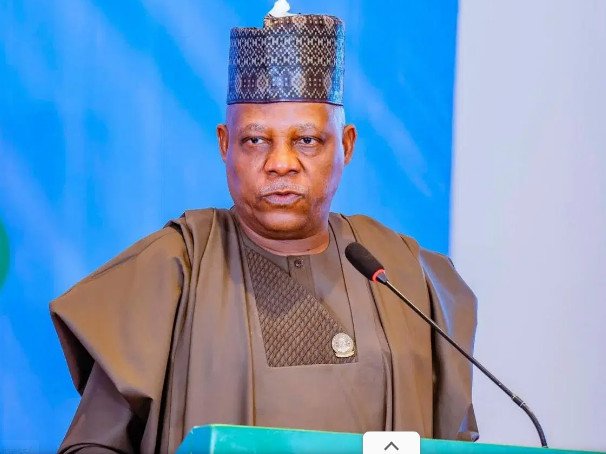
President Tinubu has delegated the Vice President, Alhaji Kashim Shetima and six governors to the Benin Republic to study a development model to drive agro-industrial growth in Nigeria.
Newera News gathered that the governors said the industrial zone demonstrated how government policy, infrastructure and private-sector investment could be combined to strengthen agricultural value chains, reduce the export of raw commodities and create jobs.
Six Nigerian governors have pledged to replicate lessons from the Glo-Djigbé Industrial Zone (GDIZ) in the Republic of Benin as part of efforts to boost agro-industrialisation, revive manufacturing and create employment across their states.
The governors accompanied Vice President Kashim Shettima on an inspection of the integrated industrial zone near Cotonou, where agricultural commodities such as cotton, cashew nuts and soybeans are processed into finished and semi-finished products.
The delegation comprised Governors Hope Uzodimma, Dauda Lawal, Caleb Mutfwang, AbdulRahman AbdulRazaq, Dikko Umar Radda and Umar Namadi.
The governors said the industrial zone demonstrated how government policy, infrastructure and private-sector investment could be combined to strengthen agricultural value chains, reduce the export of raw commodities and create jobs.
Kwara State Governor AbdulRahman AbdulRazaq described the visit as an opportunity for African countries to learn from one another’s experiences.
“Nigeria is on the verge of developing industrial processing zones across the federation. We previously visited Ethiopia to study what they had done, and we are now in Benin Republic to learn from both the challenges and the successes of this industrial zone,” AbdulRazaq said.
“We have examined the cotton, cashew and soybean value chains. What we have seen has been a tremendous success, and we will take these lessons back to Nigeria as we implement our own projects.”
He disclosed that participating states were working with the Federal Government and development partners, including the African Development Bank, Islamic Development Bank and International Fund for Agricultural Development, to provide infrastructure for the Special Agro-Industrial Processing Zones (SAPZ) programme.
Jigawa State Governor Umar Namadi said the visit had provided practical insights that would support his state’s industrialisation drive.
“What we have seen here is very encouraging, both for us as a country and as a state. We have learnt many things that will help us industrialise Jigawa and create sustainable jobs for our young people,” he said.
“With the adoption of this concept and the implementation of the SAPZ programme in Nigeria, Jigawa will be able to add value to its agricultural products and create more opportunities for its people.”
For Zamfara State Governor Dauda Lawal, the visit rekindled memories of the state’s once-thriving textile industry.
“This takes me down memory lane because I grew up around this industry. My father was one of the owners of the Zamfara Textile Industry,” Lawal said.
“At one point, the factory operated three shifts, with about 2,000 workers on each shift. Zamfara also had about 23 ginneries and an oil mill, where even cotton seeds were converted into oil.”
He said the experience had reinforced his resolve to revive cotton production and textile manufacturing in the state.
“This visit has given me a clear pathway. Reviving this industry is one of the legacies I want to leave in Zamfara State, and I am determined to make it a reality,” Lawal said.
“When the entire system is restored, farmers, processors and manufacturers will participate in the value chain, creating jobs, adding value and improving the economic conditions of our people.”
Imo State Governor Hope Uzodimma urged African countries to strengthen cooperation and benchmark progress against one another in industrial development.
“African countries, as a matter of interest, must go round and compare among themselves how far they are going ahead in building opportunities,” Uzodimma said.
He expressed satisfaction with what the delegation observed during the visit, adding that adapting the model to Nigeria’s realities could unlock economic growth.
“We are satisfied with what we have seen. If this model is properly adapted in Nigeria, with every state building around its comparative advantage, we will create the prosperity and employment opportunities our people need,” he said.
Uzodimma also commended President Bola Tinubu for directing Vice President Shettima to lead the delegation, saying the initiative aligned with the administration’s industrialisation agenda.
Katsina State Governor Dikko Umar Radda said the production systems at GDIZ could be replicated in Nigerian states with strong agricultural potential.
“What we have seen today is achievable in our states. Katsina is one of Nigeria’s major cotton-producing states, and we are also doing well in soybean production,” Radda said.
“We have both comparative and competitive advantages in these commodities. By applying the lessons from this zone, we can create jobs for our young people, generate wealth and build stronger links between agriculture and industry.”
Plateau State Governor Caleb Mutfwang described the industrial zone as proof that deliberate planning and political commitment could transform economic ideas into reality.
“I’m glad that we came together with Mr. Vice President to see a practical manifestation of what we’ve been talking about. We were earlier in Ethiopia to see what they’ve done and now we’re in the Republic to learn from the mistakes they’ve made and the positive effects and impact of the process of the industrial processing zone,” Mutfwang said.
“These are all things that have comparative and competitive advantage in our state, that we can take the experience of this place to our place and then see what we can do to alleviate the suffering of our people.”
He added that Nigeria’s ambition of building a $1 trillion economy would require deliberate investments in production and value addition.
“What we have seen is something that has moved from an idea to reality. The lesson is that this kind of success requires intentionality. It cannot happen by chance. It requires political will and the appointment of the right people to drive the process,” Mutfwang said.
“We came with the Vice President to see a practical demonstration of what we have been discussing. This aligns with the President’s vision of building a $1 trillion economy. That ambition must be driven by production, processing and a firm belief that Nigeria has the capacity to achieve it.”
The governors said the industrial zone demonstrated how government policy, infrastructure and private-sector investment could be combined to strengthen agricultural value chains, reduce the export of raw commodities and create jobs.
Six Nigerian governors have pledged to replicate lessons from the Glo-Djigbé Industrial Zone (GDIZ) in the Republic of Benin as part of efforts to boost agro-industrialisation, revive manufacturing and create employment across their states.
The governors accompanied Vice President Kashim Shettima on an inspection of the integrated industrial zone near Cotonou, where agricultural commodities such as cotton, cashew nuts and soybeans are processed into finished and semi-finished products.
The delegation comprised Governors Hope Uzodimma, Dauda Lawal, Caleb Mutfwang, AbdulRahman AbdulRazaq, Dikko Umar Radda and Umar Namadi.
The governors said the industrial zone demonstrated how government policy, infrastructure and private-sector investment could be combined to strengthen agricultural value chains, reduce the export of raw commodities and create jobs.
Kwara State Governor AbdulRahman AbdulRazaq described the visit as an opportunity for African countries to learn from one another’s experiences.
“Nigeria is on the verge of developing industrial processing zones across the federation. We previously visited Ethiopia to study what they had done, and we are now in Benin Republic to learn from both the challenges and the successes of this industrial zone,” AbdulRazaq said.
“We have examined the cotton, cashew and soybean value chains. What we have seen has been a tremendous success, and we will take these lessons back to Nigeria as we implement our own projects.”
He disclosed that participating states were working with the Federal Government and development partners, including the African Development Bank, Islamic Development Bank and International Fund for Agricultural Development, to provide infrastructure for the Special Agro-Industrial Processing Zones (SAPZ) programme.
Jigawa State Governor Umar Namadi said the visit had provided practical insights that would support his state’s industrialisation drive.
“What we have seen here is very encouraging, both for us as a country and as a state. We have learnt many things that will help us industrialise Jigawa and create sustainable jobs for our young people,” he said.
“With the adoption of this concept and the implementation of the SAPZ programme in Nigeria, Jigawa will be able to add value to its agricultural products and create more opportunities for its people.”
For Zamfara State Governor Dauda Lawal, the visit rekindled memories of the state’s once-thriving textile industry.
“This takes me down memory lane because I grew up around this industry. My father was one of the owners of the Zamfara Textile Industry,” Lawal said.
“At one point, the factory operated three shifts, with about 2,000 workers on each shift. Zamfara also had about 23 ginneries and an oil mill, where even cotton seeds were converted into oil.”
He said the experience had reinforced his resolve to revive cotton production and textile manufacturing in the state.
“This visit has given me a clear pathway. Reviving this industry is one of the legacies I want to leave in Zamfara State, and I am determined to make it a reality,” Lawal said.
“When the entire system is restored, farmers, processors and manufacturers will participate in the value chain, creating jobs, adding value and improving the economic conditions of our people.”
Imo State Governor Hope Uzodimma urged African countries to strengthen cooperation and benchmark progress against one another in industrial development.
“African countries as a matter of interest must go round and compare among themselves how far they are going ahead in building opportunities,” Uzodimma said.
He expressed satisfaction with what the delegation observed during the visit, adding that adapting the model to Nigeria’s realities could unlock economic growth.
“We are satisfied with what we have seen. If this model is properly adapted in Nigeria, with every state building around its comparative advantage, we will create the prosperity and employment opportunities our people need,” he said.
Uzodimma also commended President Bola Tinubu for directing Vice President Shettima to lead the delegation, saying the initiative aligned with the administration’s industrialisation agenda.
Katsina State Governor Dikko Umar Radda said the production systems at GDIZ could be replicated in Nigerian states with strong agricultural potential.
“What we have seen today is achievable in our states. Katsina is one of Nigeria’s major cotton-producing states, and we are also doing well in soybean production,” Radda said.
“We have both comparative and competitive advantages in these commodities. By applying the lessons from this zone, we can create jobs for our young people, generate wealth and build stronger links between agriculture and industry.”
Plateau State Governor Caleb Mutfwang described the industrial zone as proof that deliberate planning and political commitment could transform economic ideas into reality.
“I’m glad that we came together with Mr. Vice President to see a practical manifestation of what we’ve been talking about. We were earlier in Ethiopia to see what they’ve done and now we’re in the Republic to learn from the mistakes they’ve made and the positive effects and impact of the process of the industrial processing zone,” Mutfwang said.
“These are all things that have comparative and competitive advantage in our state, that we can take the experience of this place to our place and then see what we can do to alleviate the suffering of our people.”
He added that Nigeria’s ambition of building a $1 trillion economy would require deliberate investments in production and value addition.
“What we have seen is something that has moved from an idea to reality. The lesson is that this kind of success requires intentionality. It cannot happen by chance. It requires political will and the appointment of the right people to drive the process,” Mutfwang said.
“We came with the Vice President to see a practical demonstration of what we have been discussing. This aligns with the President’s vision of building a $1 trillion economy. That ambition must be driven by production, processing and a firm belief that Nigeria has the capacity to achieve it.”