Why True Federalism Matters in Nigeria
Why True Federalism Matters in Nigeria
Federalism is a system of government where political powers are shared between the federating units – the national and state governments. This definition would be familiar if you took social studies and civic education classes.
Unlike a system of government where powers are concentrated in the centre, like the People’s Republic of China, or a situation where powers are focused on the states with the centre being weak, like the now defunct Senegambia confederacy, federalism ensures that each federating unit has powers that are entrenched in the constitution and cannot be withheld unilaterally. While many countries call their form of government federalism, actual federalism shares peculiar characteristics.
Written Constitution. The written constitution subsumes the power-sharing formula between the state and other federating units. With a written constitution, changes can only be effected to the constitution after much debate and rigorous reading of the old constitution.
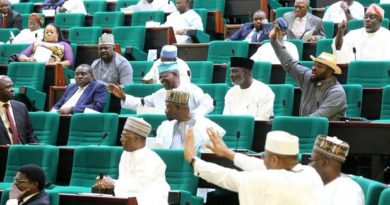
For instance, in Nigeria, for a law to be changed or made, four-fifths of the Nigerian National Assembly must vote in favour; following the approval by the national assembly, the change or regulation must be approved by 23 state houses of assemblies. This system ensures that all tribes in the country are fully represented in the country’s law-making process.
Devolution of Powers: There is only federalism with genuine devolution of powers. Devolution of powers is when the central government delegates authority to smaller government areas within a country, such as states, provinces, regions, or cities.
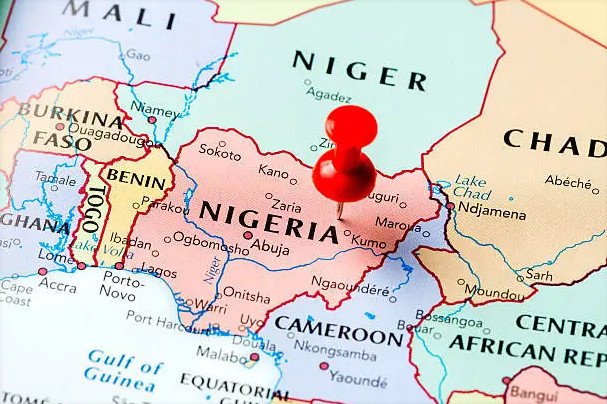
In Nigeria, sub-national governments include the 36 states and the Federal Capital Territory (FCT). They are responsible for local security, infrastructure, and improving local businesses to make them relevant to their territories. Unlike the unitary system of government, where controls are devolved with conventions, the devolution of powers in federalism is backed by law. Devolution of powers is essential in federalism as it helps to dampen regional, ethnic, and cultural divides within the federal government.
Independent Judiciary: True federalism empowers a potent and robust judiciary. A strong bench ensures the laws are well interpreted no matter whose ox is gored. Moreover, in cases where the separation of powers between the federal government and the states needs to be appropriately delineated or made explicit, which might lead to disputes, the judiciary must help settle these disputes.
With Nigeria’s linguistic, cultural, and ethnic diversity, it became clear that federalism might be the answer to Nigeria’s fragmented unity; hence, its adoption. In the case of Nigeria, the federating units are only autonomous on paper, that is, in the constitution. In reality, the Nigerian state operates what can be termed quasi-federalism, a form of state between the unitary system and the federal system. It combines the characteristics of a federal system of government and a unitary system of government. As a result, Nigeria has a federal structure with a heavy bias to the centre.
The debates and controversies surrounding federalism in Nigeria are not new. In 1957, the Willink Commission was formed, and the commission was constituted to look into the disagreement on the creation of states and the elimination of ethnic domination. Sixty-six years later, these fears and issues persist. Since the country’s return to democracy in 1999, there have been increased calls for restructuring and amending the Nigerian constitution. These calls and agitations are borne out of feelings of marginalisation among various ethnic groups, a situation advocates and policymakers say will be doused with the implementation of genuine federalism. A federalism where the federating units can get more powers, especially on resource revenue and distribution.
In Nigeria, the division of powers is structured as in the legislative lists, which are divided into 3, namely the exclusive list, the concurrent list, and the residual list. The exclusive list is reserved ONLY for the federal government and contains 68 items. The items include mines and minerals, railways, police, national parks, etc. The concurrent list includes items on which the federal and state governments can legislate, such as tax collection, revenue allocation, and scientific and technological research. Finally, powers not listed in the Constitution are under the residual list.
With the delineation of powers, conflicts and issues continue to arise regarding the autonomy of the tiers of government. In 2003, the Supreme Court had to decide whether the National Assembly had the authority to pass laws governing national urban and regional planning. Local Government administrators continue to complain about the overbearing attitudes of the state governors. Other areas of conflict between the federation and states include minimum wage and other matters, the Nigeria Police Force, and revenue sharing – under the current sharing formula, the FG takes 52.68% of the revenue, states get 26.72%, and the local governments get 20.60%.
Advocates and pressure groups continue to claim that the central government arrogates too much power to itself, giving the other federating units less control. Of the 68 items on the exclusive legislative list, there are calls for some of these items to be devolved into the state government; furthermore, the federal government still has veto power over state governments under the concurrent legislative list. In light of this, it is argued that constitutional amendments are necessary. Civil society groups in Nigeria call for increased devolution of powers, whereby more public programs handled by the federal government are transferred to state and local governments in the 36 states of the federation.