
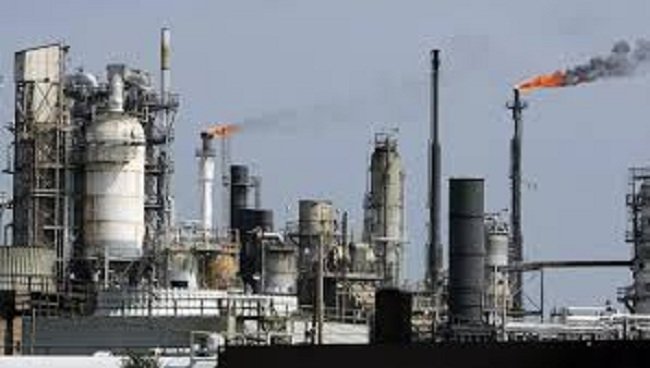
Why Nigerians Are Not Benefiting from the Decline in Crude Oil Prices?

Why are Nigerians Not Benefiting from the Drop in Crude Price?

Despite the recent decline in global crude oil prices, many Nigerians have yet to see any meaningful reduction in the cost of fuel, transportation, food, or other essential goods. Instead, commodity prices continue to rise, prompting questions about why an oil-producing country is not benefiting more directly from movements in the international oil market.
Newera News Economic analysts say a combination of domestic and global factors is responsible for the situation. One of the primary reasons is the removal of fuel subsidy by the Federal Government. Petrol prices are now largely determined by market forces rather than government regulation. As a result, even when crude oil prices fall, pump prices may not decline significantly if other cost components remain elevated.
Another major factor is the depreciation of the naira. Nigeria imports a substantial share of its refined petroleum products, and payments are made in US dollars. As the naira weakens against the dollar, the cost of importing fuel rises, offsetting any gains from lower crude oil prices.
Experts also point to the high cost of importing refined petroleum products. Freight charges, marine insurance, port handling fees, storage costs, and marketers’ margins all contribute to the final pump price paid by consumers.
The country’s limited refining capacity remains another significant challenge. Although local refineries are gradually increasing production, Nigeria still depends heavily on imported fuel. Until domestic refining is sufficient to meet national demand, Nigerians may not fully benefit from fluctuations in global crude oil prices.
Taxes, levies, and regulatory charges imposed across the petroleum supply chain also add to the retail cost of fuel. These additional expenses are ultimately passed on to consumers.
Rising electricity and transportation costs, as well as insecurity in farming communities, have also driven up food prices. Farmers face higher production costs due to expensive diesel, poor road infrastructure, and attacks on agricultural communities, making food more expensive regardless of global oil price movements.
Inflation continues to erode consumers’ purchasing power. Higher prices for goods and services, combined with rising interest rates, make it difficult for households to feel any relief from lower crude oil prices.
Global market dynamics also play a role. International crude oil prices fluctuate daily based on supply and demand, geopolitical tensions, and production decisions by major oil-producing countries. Local fuel prices do not always adjust at the same pace because marketers often sell existing stock purchased at higher prices.
Infrastructure deficiencies, including poor roads, inadequate pipelines, and inefficient distribution systems, increase the cost of transporting petroleum products across the country. These logistics costs are reflected in pump prices.
Industry observers further note that market competition remains limited. In some areas, a few dominant marketers influence pricing, slowing the transmission of cost reductions to consumers.
Corruption, product diversion, smuggling, and inefficiencies within the petroleum value chain also contribute to higher domestic prices.
Key Factors Preventing Nigerians from Benefiting
Removal of fuel subsidy
Weak naira and exchange rate volatility
Heavy dependence on imported refined fuel
High shipping, insurance, and logistics costs
Limited domestic refining capacity
Taxes, levies, and marketers’ margins
Inflation and rising cost of living
High transportation and electricity costs
Insecurity is affecting agricultural production
Poor infrastructure and distribution networks
Market inefficiencies and limited competition
Corruption, smuggling, and supply chain leakages
The Way Forward
Economists recommend expanding domestic refining capacity, stabilising the foreign exchange market, strengthening the naira, improving infrastructure, supporting agriculture, addressing insecurity, promoting competition in the downstream petroleum sector, and ensuring transparent regulation of the oil industry. They also urge the government to implement policies that will allow any savings from lower global crude oil prices to be reflected more quickly in domestic fuel prices.
Until these structural challenges are addressed, many Nigerians are unlikely to experience the full benefits of falling crude oil prices, despite the country’s status as one of Africa’s leading oil producers.
Meanwhile, the Federal Competition and Consumer Protection Commission warns petroleum marketers against indiscriminate increases in pump prices.

Federal Competition and Consumer Protection Commission Warns Marketers Against Price Hike

The Federal Competition and Consumer Protection Commission (FCCPC) has warned petrol marketers against unfair petrol pricing.FCCPC warns petrol marketers

The Federal Competition and Consumer Protection Commission, FCCPC, has warned petrol marketers against unfair petrol pricing.

In a statement issued on Sunday by the Director of Corporate Affairs of the Commission, Ondaje Ijagwu, a review of prevailing gantry and retail prices suggested that consumers were yet to benefit from the easing in global oil prices

The FCCPC noted that the earlier spike in crude oil prices prompted local refiners and marketers to raise pump prices across states in Nigeria.

You will recall that petrol prices rose to between ₦ 1,350 and ₦ 1,500 per litre, while diesel sold for as high as ₦ 2,000 as hostilities intensified in the Gulf between April and May.

According to the Commission, petrol is still being sold at an average of N1,200 nationwide, with some local refiners fixing gantry prices between N1,025 and N1,075.

“The Federal Competition and Consumer Protection Commission, FCCPC, has expressed concern over findings from an ongoing surveillance of the downstream petroleum market, suggesting undue exploitation of consumers.

“A review of the gantry prices of local refiners, marketers, depot operators and retail outlet operators revealed token reductions in prices that are not commensurate with the steep fall in crude prices in the global market,” the statement said.

The Executive Vice Chairman and Chief Executive Officer of the FCCPC, Tunji Bello, said the commission was concerned by what appeared to be a one-sided response to changes in crude oil prices.

According to him, operators in the downstream sector often move swiftly to raise pump prices whenever crude oil prices increase, but are reluctant to pass on the benefits to consumers when prices fall.

Bello said, “To be clear, the Commission does not regulate or approve petroleum prices in a deregulated downstream market. Our responsibility under the Federal Competition and Consumer Protection Act, 2018, is to promote competitive markets, prevent anti-competitive conduct, and protect consumers from unfair, deceptive and exploitative business practices.

“We are concerned that while dealers often respond swiftly by hiking pump prices whenever crude prices rise, it is curious that it is taking forever for consumers to benefit significantly when crude prices fall. Competitive markets must work fairly in both directions.”

Why are Nigerians Not Benefiting from the Drop in Crude Price? Let’s have your take on this.